
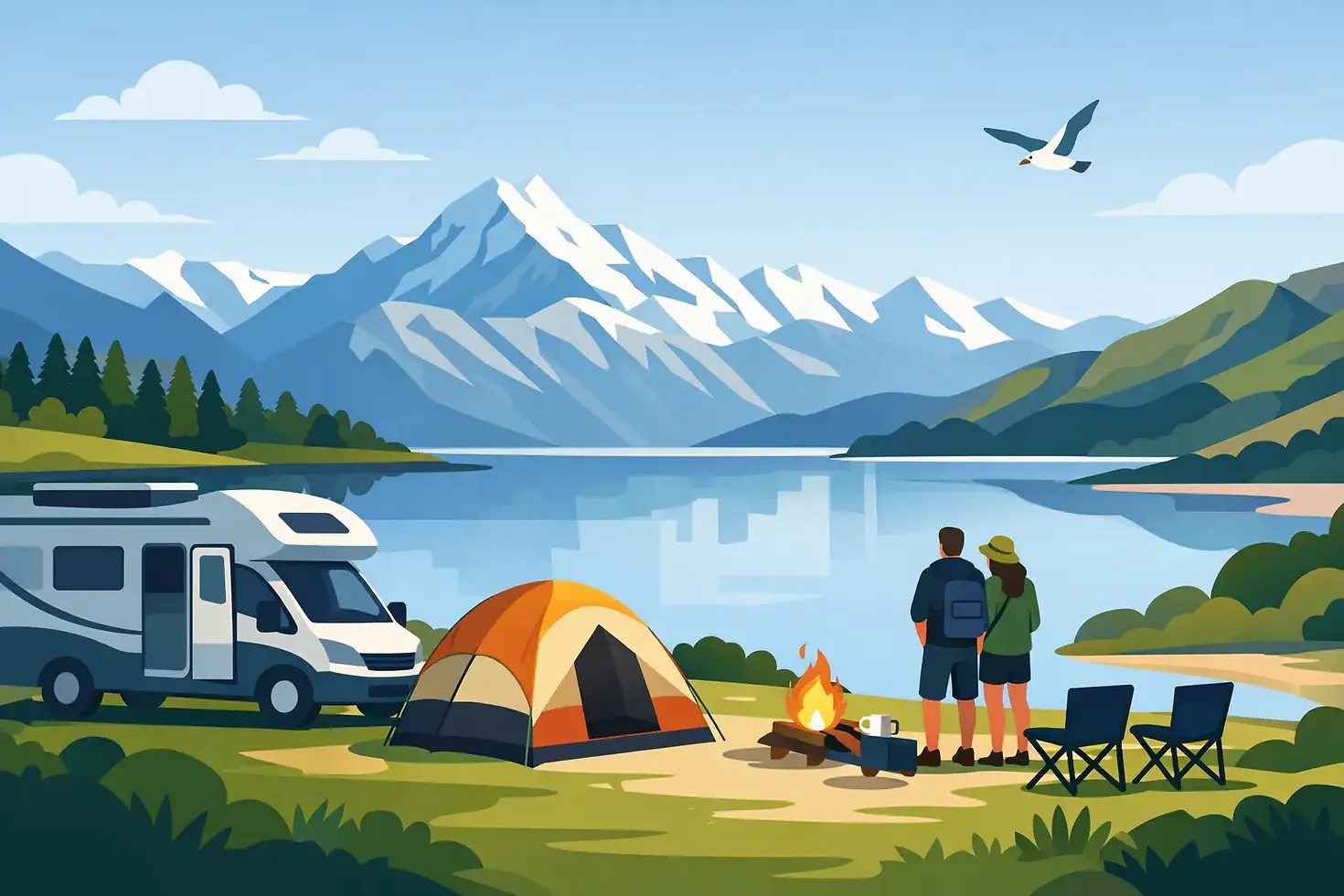
South Island Camping Ground Guide for Easy Touring
A great South Island motorhome trip often comes down to a simple pleasure: pulling into a peaceful camping ground after a day of big mountain views, beach walks or lakeside drives, then putting the kettle on while the light changes outside. This South Island camping ground guide will help you choose places that suit your travel style, your vehicle and the pace of holiday you want.
The South Island has everything from family-friendly holiday parks close to town to small, basic Department of Conservation campsites in wonderfully remote settings. Both can be excellent, but they offer very different experiences. Planning a sensible mix gives you comfort where it matters and more time to enjoy the amazing sights along the way.
Choosing the Right South Island Camping Ground
The first decision is whether you need the convenience of a full-service holiday park or would prefer a simpler nature-based campsite. There is no single right answer. It depends on your motorhome, the weather, who is travelling with you and how long you are on the road.
Holiday parks are usually the easiest option for first-time campervan travellers and families. A powered site lets you connect to electricity, recharge devices and use heating without worrying about your leisure battery. You will generally find toilets, showers, laundry facilities, kitchens and rubbish disposal, with many parks also offering playgrounds, games rooms or swimming pools. They are particularly useful after a few days of travelling, or when you need to refill supplies and do a load of washing.
DOC campsites are often more basic, but their settings can be hard to beat. You may wake near a native forest, a quiet river, a dramatic alpine valley or a coastline far from busy towns. Facilities range from toilets and water taps through to very limited amenities, so always check what is available before arriving. Some sites are suitable for larger motorhomes, while others are better for compact campervans or tents.
For a relaxed holiday, alternate between the two. Stay at a holiday park before or after a long driving day, then enjoy a couple of quieter nights closer to the scenery. This approach works well for couples looking for flexibility and for families who appreciate a dependable base every few nights.
Powered or Non-powered Sites
A powered site is worth booking if you would like reliable mains electricity, especially during cooler months. South Island evenings can become chilly even after a warm day, particularly around Tekapō, Aoraki Mount Cook, the West Coast and Central Otago. A power connection makes life more comfortable and helps keep your motorhome ready for the next day.
A non-powered site can be a good choice when you are travelling for just one night, have a well-equipped self-contained vehicle and want a quieter, more natural setting. Keep an eye on your battery level and fresh water, and use the vehicle systems thoughtfully. Your motorhome handover is the right time to ask how long you can comfortably stay off-grid with your particular setup.
Where to Camp on a South Island Road Trip
The best camping grounds are usually those that support the route you are already travelling, rather than sending you well out of your way. Allow enough time to arrive, settle in and enjoy where you are. The South Island roads are scenic, but they are often slower than they look on a map.
Nelson, Tasman and Abel Tasman
Nelson Tasman is a lovely place to begin or slow down your journey. Holiday parks around Nelson, Motueka and Mārahau put you close to beaches, cafés, local produce and access points for Abel Tasman National Park. This is a particularly easy region for families, with plenty of short walks, safe swimming spots and sunny places to spend an unhurried afternoon.
If you are heading into more remote parts of Tasman, choose campsites with care and check road conditions. Some gravel roads and narrow approaches are less suited to larger motorhomes. A little planning keeps the drive enjoyable rather than stressful.
The West Coast
The West Coast rewards travellers who are happy to take their time. Camping grounds near Punakaiki, Hokitika, Franz Josef and Fox Glacier provide a practical base for exploring rainforest, wild beaches, glowworm walks and glacier country. Weather changes quickly here, so powered sites and good drying facilities can be especially welcome.
Book ahead during busy periods if you have a preferred stop in mind. In quieter months, flexibility is one of the real joys of travelling the coast, but it is still sensible to confirm seasonal opening dates and check whether heavy rain has affected local roads.
Canterbury, Tekapō and Aoraki Mount Cook
Camping around Lake Tekapō and Aoraki Mount Cook places you among some of the South Island’s most memorable scenery. Clear nights can be spectacular, but temperatures drop quickly, so pack warm layers even in summer. A powered campsite is often a comfortable choice here, especially if you are travelling with children.
These areas are popular throughout the year, and accommodation fills quickly during school holidays and the peak summer season. Reserve your preferred campsite well in advance, then leave room in your itinerary for a weather change. Mountains, lakes and walking tracks are far more enjoyable when you do not feel rushed.
Wānaka, Queenstown and Central Otago
Wānaka and Queenstown have a wide choice of holiday parks and camping options, but demand can be high. Staying just outside the busiest centres can offer better availability and a quieter overnight stop, while still keeping you close to the action. It can also make sense to stay two nights in one place rather than moving every day.
Central Otago is ideal for travellers who enjoy open landscapes, small towns, bike trails and a slower rhythm. Camp near Cromwell, Alexandra or Clyde for easy access to orchards, historic sites and the Otago Central Rail Trail. Summer days can be hot, while nights remain cool, making a motorhome a very comfortable way to travel through the region.
Fiordland and the Southern Lakes
Te Anau is the natural camping base for Fiordland. It offers the services you may want before a trip to Milford Sound, including fuel, groceries and holiday parks with powered sites. The Milford Road is an experience in itself, but it is not a route to rush. Check conditions, carry warm clothing and allow plenty of time for photo stops.
Further south, places such as Invercargill, Riverton and the Catlins offer a quieter side of the island. Camping grounds here can feel wonderfully removed from the main tourist trail. Stock up before heading into smaller settlements, as shops and services may be limited.
Booking Tips That Make Camping Easier
Summer, school holidays, long weekends and major events can make the most popular camping grounds busy. If your route includes Abel Tasman, Lake Tekapō, Queenstown, Wānaka, Franz Josef or Te Anau, booking ahead is a wise move. It gives you certainty after a full day on the road and means you are not trying to find a suitable site late in the afternoon.
When booking, check the site length and whether the park can accommodate your motorhome comfortably. Ask about arrival times, power connections, laundry access, pet rules if relevant, and whether a dump station is available. Most holiday parks are very helpful, particularly when they know you are travelling in a larger vehicle or arriving with young children.
Outside peak times, leave a few unbooked nights if you can. The freedom to stay longer beside a lake, take an extra walk or adjust for rain is one of the best parts of a self-drive holiday. Just avoid relying on last-minute availability in small, high-demand destinations.
Camp Considerately and Travel Well
New Zealand’s campsites stay beautiful because visitors look after them. Use marked sites, follow local signage, keep noise low in the evening and take all rubbish to the proper facilities. Empty wastewater and toilet cassettes only at approved dump stations. These small habits protect the places everyone has come to enjoy.
Freedom camping rules vary by location and can change, so do not assume an empty roadside or car park is an overnight option. A self-contained motorhome may be permitted in some areas, but local restrictions still apply. Designated camping grounds are often the easier and more relaxing choice, with proper facilities and no uncertainty about where you can stay.
If you are hiring a campervan or motorhome through Nelson Tasman Motorhome Hire, choose a vehicle that gives your group enough room for both driving days and quiet evenings. Families may value separate sleeping spaces, while couples might prefer a compact layout that is easy to park. The right vehicle, paired with a thoughtful mix of campsites, makes the whole journey feel easier.
Leave a little space in your plan for the unexpected good things: a calm morning at a coastal campsite, a recommendation from a park manager, or an extra night when the view outside your motorhome is simply too beautiful to leave.
Jamie Allam +64 2743 30651
Kath Allam + 64 2726 69743
Business Owners
www.ntmh.co.nz
